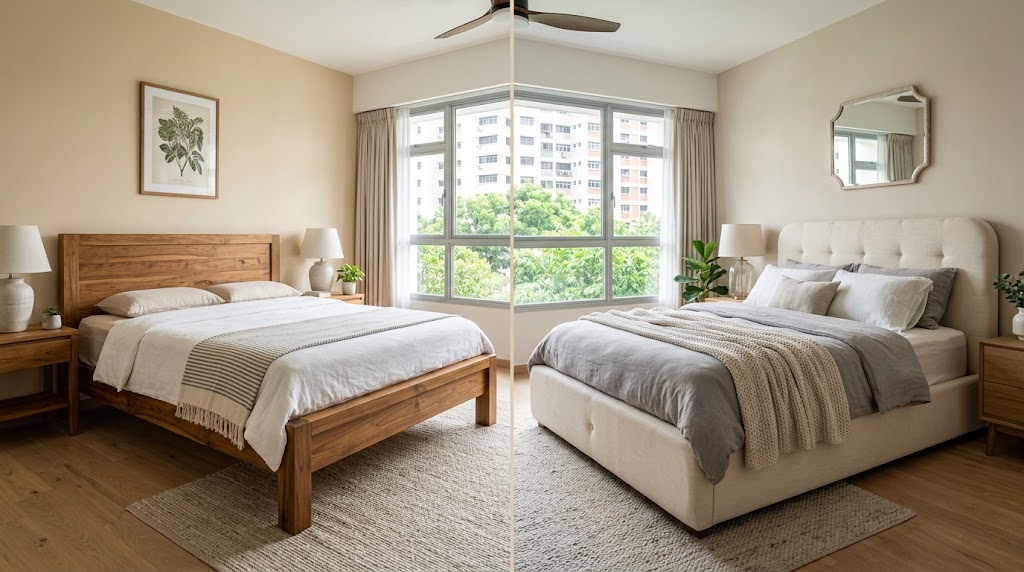
TL;DR: Solid wood generally outlasts upholstery on structure, often 15 years or more, but it shows scratches and can be affected by humidity swings. Upholstered frames are quieter, softer and more forgiving on walls and shins, but the fabric usually ages before the frame does. In Singapore’s climate, the deciding factors are humidity handling and whether you have pets or young children.
“Which one lasts longer?” is the question we get asked most often about bed frames at our Ubi showroom. It has an answer, but it’s not the answer most people expect.
Structurally, solid wood usually wins. In practice, that’s often not the reason either frame gets replaced. Most bed frames in Singapore homes are replaced because the fabric looks tired, the storage mechanism failed, or the household moved and the frame didn’t suit the new room — not because the timber gave out.
So let’s look at both properly.
What “wooden bed frame” actually means
This matters more than the wood-versus-fabric question, because “wooden” covers a wide quality range:
- Solid wood — genuine timber throughout. The most durable and the most expensive. Handles decades of use, can be sanded and refinished.
- Engineered wood / plywood — layered construction. Good strength-to-cost ratio, more stable than solid wood in humidity swings, and used in a great many quality frames.
- Particleboard or MDF with veneer — compressed fibre with a decorative surface. The most common material at lower price points. Fine while dry and undisturbed, but vulnerable to moisture and doesn’t survive repeated dismantling and reassembly well.
If a frame is described only as “wooden,” ask which of the three it is. That single question separates a frame that lasts fifteen years from one that develops joint wobble in three.
What “upholstered bed frame” actually means
Upholstered frames are a wooden or metal skeleton wrapped in padding and fabric. So you’re really assessing two things:
- The internal frame — the same solid wood / engineered wood / particleboard hierarchy applies underneath.
- The fabric and padding — usually the part that ages first.
A well-built upholstered frame with a solid internal structure can easily outlast a cheap all-timber frame. The upholstery is a surface, not a substitute for structure.
Durability: the honest comparison
Solid wood typically holds up longest structurally. Joints can be re-tightened, surfaces can be refinished, and a good frame can genuinely serve fifteen to twenty years or more.
Upholstered frames on a solid internal structure have similar structural life, but the fabric will show wear far earlier — typically visible after five to eight years depending on use, sunlight exposure and whether pets are involved. Headboards take the most punishment, because people sit against them.
The weak point in both cases is the same: the slat system and centre support. This is where most bed frame failures actually originate, regardless of material. Wide slat gaps let the mattress sag between them, and an under-specified centre rail will bow under a heavy mattress. When you’re comparing frames, look at slat spacing and centre support before you look at the finish.
Also read: Best Bed Frames Singapore for Smaller Homes
The Singapore factor: humidity
This is where the general international advice doesn’t transfer cleanly.
For wooden frames: Singapore’s consistently high humidity means timber absorbs and releases moisture. Solid wood can expand, contract, and occasionally develop joint movement or creaking over years. The bigger risk is in homes that swing hard between heavy air-conditioning and open windows — that cycling is harder on timber than steady humidity is. Engineered wood is more dimensionally stable under these conditions, which is why it appears in a lot of well-designed frames sold here.
For upholstered frames: humidity is a fabric problem rather than a structural one. Poor ventilation around and under a bed can allow moisture to sit in the padding, and in the worst cases lead to musty odour or mildew. This is mostly preventable — keep some airflow under the bed, and don’t push an upholstered frame flush against an exterior wall that gets condensation.
Neither material is disqualified by the climate. Both just need the right specification and a bit of sense in placement.
Practical differences that matter day to day
Noise. Upholstered frames are quieter. Wooden frames, particularly those with metal fittings, can develop creaks over time as joints loosen — fixable by re-tightening, but it recurs.
Comfort against the headboard. If you read, work or watch anything in bed, an upholstered headboard is significantly more comfortable than timber. This is a genuine daily quality-of-life difference, not a small one.
Shins and walls. Padded corners cause fewer injuries in a tight bedroom, and upholstery doesn’t scuff paint the way a hard timber edge does. In a compact HDB or condo bedroom with narrow walking space, this counts.
Cleaning. Wood wins clearly. A wipe-down handles most things. Fabric attracts dust, holds odour, and in Singapore’s dust and humidity needs regular vacuuming. Removable, washable covers make a real difference if you can get them.
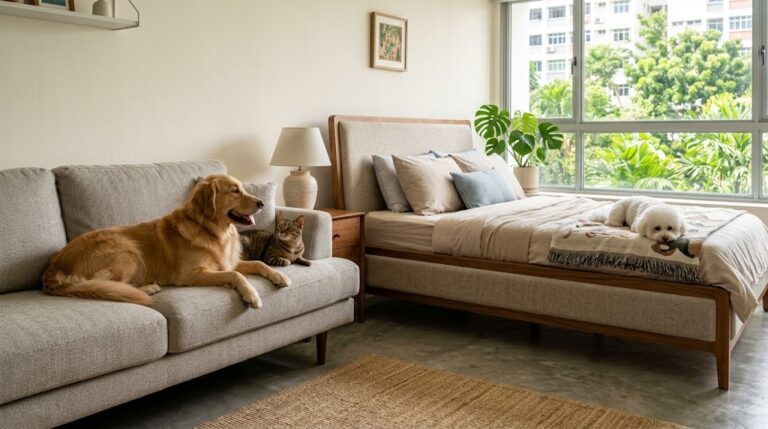
Pets and children. Wood handles claws and spills far better. Fabric absorbs everything and shows it.
Also read: Pet-Friendly Bed Frames & Sofa Fabrics in Singapore (link once published)
Which suits which household?
Choose a wooden bed frame if: you have pets or young children, you want maximum structural longevity, you prefer low-maintenance cleaning, or you like a timber aesthetic that ages rather than wears.
Choose an upholstered bed frame if: you sit up in bed regularly, you want a softer and quieter bedroom, you have a tight room where padded corners help, or you’re after a hotel-style look.
Also read: Hotel Mattress Singapore: How to Get That 5-Star Bed at Home (link once published)
Don’t forget storage — it often overrides the material question
For a lot of Singapore bedrooms, the more consequential decision isn’t wood versus fabric at all. It’s whether the frame gives you storage.
A storage bed frame with a lift-up base or drawers can replace an entire chest of drawers in a compact room. Both wooden and upholstered versions are available, so you don’t have to choose between material preference and storage.
If storage matters, prioritise the mechanism quality over the material — a smooth, well-rated gas lift or properly running drawers will determine your satisfaction far more than whether the exterior is oak-finish or linen.
Other options worth comparing: divan bed frames for the upholstered hotel look, platform bed frames for a low-profile modern feel, and hidden wall beds where floor space is genuinely at a premium.
Also read: Best Storage Bed for Small Bedroom Spaces Also read: Is a Hidden Wall Bed Singapore Right for You?
Whichever you choose, check the mattress pairing
A heavy pocketed spring or latex mattress needs closer slat spacing and stronger centre support than a lightweight foam one. Buying the frame and mattress together — and telling the showroom which mattress is going on the frame — avoids the most common cause of premature sagging.
Browse bed frames and the mattress collection together, or bring both questions to the showroom at once.
See both in person at Ubi
Material is one of the few furniture decisions that photographs badly. Fabric texture, timber grain, headboard firmness and how a lift mechanism actually feels are all things you need your hands on.
Visit the Catnap Lair furniture showroom at 33 Ubi Avenue 3, Vertex, #01-16, or contact our team to arrange a visit.
Frequently Asked Questions
Which lasts longer, a wooden or upholstered bed frame? Solid wood generally lasts longest structurally and can be refinished. Upholstered frames on a solid internal structure have comparable structural life, but the fabric shows wear after roughly five to eight years.
Are upholstered bed frames suitable for Singapore’s humidity? Yes, provided there’s airflow around and under the bed. Avoid pushing the frame flush against walls prone to condensation, and vacuum the fabric regularly to prevent moisture and dust build-up.
Do wooden bed frames creak in Singapore? They can over time, as humidity cycling loosens joints. Periodically re-tightening fittings usually resolves it. Engineered wood tends to be more dimensionally stable than solid timber in fluctuating conditions.
Which bed frame is better with pets? Wooden frames handle claws, fur and spills far better than upholstery. If you prefer an upholstered look with pets, choose a tight-weave, removable-cover fabric.
Does the bed frame affect mattress lifespan? Significantly. Wide slat gaps and weak centre support cause mattresses to sag prematurely and can void warranties. Check slat spacing and centre rail strength before buying.
Where can I compare bed frame materials in Singapore? Visit the Catnap Lair showroom at Ubi, where wooden, upholstered, divan, platform and storage bed frames can be compared side by side at direct factory pricing.