A sunny window can make a room feel cheerful at 9 a.m. and uncomfortably warm by lunchtime. If you are asking what blinds block heat, the short answer is that cellular blinds, blackout roller blinds, and exterior shades tend to perform best. But the right choice depends on where the sun hits, how much daylight you want to keep, and whether the room needs privacy as well as cooling.
For a bedroom, heat control usually goes hand in hand with darker, better sleep conditions. For a living room, you may prefer a blind that reduces glare and solar heat without turning the space into a cave. The most effective solution is not always the thickest fabric – it is the one that fits your window, routine, and home.
What blinds block heat most effectively?
Heat enters through windows in two main ways: sunlight passes through the glass, and warm air transfers through it. Blinds cannot change the glass itself, but they can intercept sunlight before it heats up your furniture, flooring, and indoor air. The best designs also create an insulating air pocket between the blind and the window.
Cellular blinds trap heat with air pockets
Cellular blinds, sometimes called honeycomb blinds, are among the strongest indoor options for heat reduction. Their pleated structure forms small pockets of air, which slows heat transfer through the window. This makes them especially useful in bedrooms, nurseries, and home offices where afternoon sun makes the room hard to use.
Look for a light-colored, reflective backing facing the window. A darker fabric may look striking indoors, but it can absorb more solar energy. For the best result, choose a close-fitting design that sits near the glass and covers the full window opening. Side gaps allow warm air and light to slip around the blind, reducing its insulating effect.
The trade-off is appearance and maintenance. Cellular fabrics have a softer, more textured look than a sleek roller blind, and dust can settle inside the pleats. A gentle vacuum with a brush attachment is usually enough to keep them tidy.
Blackout roller blinds provide dependable sun control
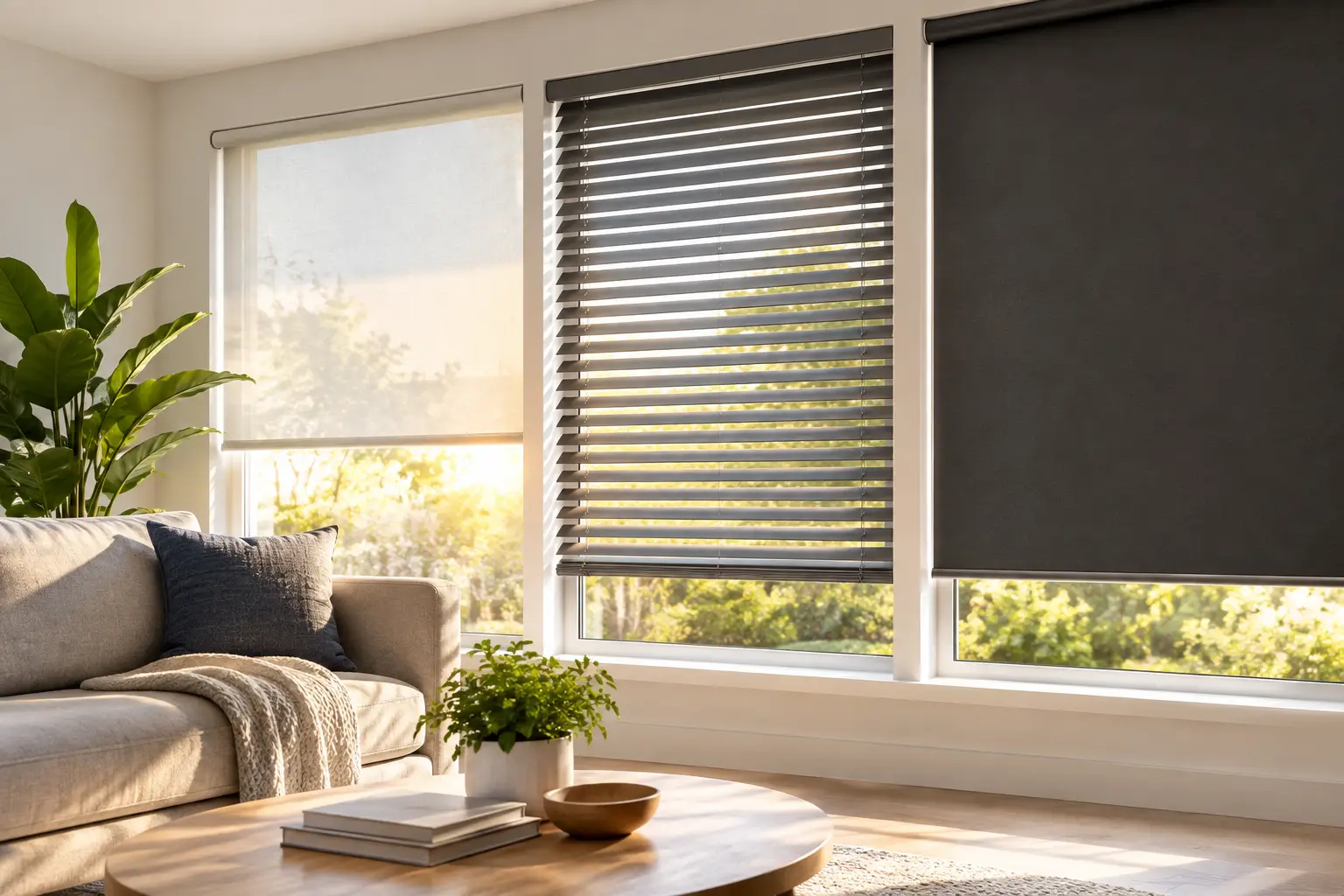
Blackout roller blinds are a practical favorite for heat, glare, and privacy. The fabric is generally opaque and often has a light or reflective coating on the window-facing side. When installed close to the window and sized correctly, they can significantly reduce direct solar gain while making the room noticeably darker.
They are an excellent fit for bedrooms where morning or late-afternoon sun disrupts sleep. They also work well in media rooms and west-facing living spaces where glare on a television or laptop becomes frustrating. A standard blackout roller blind does not necessarily insulate as effectively as a well-fitted cellular blind, but it is simple, neat, and very effective at stopping direct sunlight.
For a softer result, consider a dual-layer or combi blind. This style pairs alternating sheer and opaque bands, allowing you to filter light during the day and close the opaque sections when stronger sun protection is needed. It offers more flexibility than blackout fabric alone, although it will not provide the same darkness or heat control when the sheer bands are aligned.
Venetian blinds manage light but have more gaps
Venetian blinds are useful when you want control rather than complete coverage. By tilting the slats upward, you can redirect daylight toward the ceiling and reduce harsh glare while still keeping the room bright. Aluminum Venetian blinds are especially practical near humid areas because they are easy to wipe clean.
However, Venetian blinds are not usually the best answer for maximum heat blocking. The slats have gaps, and warm air can circulate between them. They are better suited to rooms where adjustable daylight and privacy matter more than the highest possible thermal performance. Choosing light-colored slats helps reflect rather than absorb heat.
Outdoor zip blinds stop sun before it reaches the glass
If your windows or balcony receive intense direct sun, outdoor zip blinds can make the biggest difference. Because they sit outside the glass, they block solar energy before it enters the window area. This is a smarter approach for exposed patios, balconies, and large openings that heat up quickly.
Outdoor blinds need weather-appropriate materials, secure tracks, and professional measurement. They are a larger investment than indoor blinds, but they can improve comfort in spaces that otherwise feel too hot to enjoy during bright hours. They also add privacy and can help make a balcony feel like a more usable extension of the home.
How to choose heat-blocking blinds for each room
The direction your window faces matters as much as the blind itself. East-facing windows receive strong morning sun, while west-facing windows often create the most uncomfortable late-day heat. South-facing windows in the Northern Hemisphere receive longer periods of sun, although nearby buildings, trees, and overhangs can change the picture considerably.
Start by observing when the room gets hot, not just when it looks bright. A room may receive mild daylight for most of the day but become stifling for two hours in the afternoon. That is the period your blind setup needs to handle.
For bedrooms, prioritize blackout coverage and a close fit. Roller blinds or cellular blinds are usually the most practical choices, and adding curtains can improve both light blocking and insulation. For living rooms, combi blinds give more control over daylight, while a blackout roller blind may be better for a window with severe glare. In kitchens and humid spaces, easy-clean Venetian blinds may make sense if heat reduction is a secondary concern.
In compact homes, a blind has to do more than one job. A slim roller blind can keep the window area visually clean, while a bulky curtain may take up valuable wall space. On the other hand, curtains layered over blinds can provide a more finished look and add another barrier against heat. The better choice depends on your available space and how often you need to open the window.
Details that make blinds work better
Even premium blind fabric will underperform if it is poorly fitted. Measure carefully so the blind covers the glass and minimizes side gaps. An outside-mounted blind that extends beyond the window frame can block more light around the edges, while an inside mount creates a cleaner built-in appearance but may leave slightly more room for heat to enter.
Color matters too. White, cream, and other pale window-facing surfaces reflect more sunlight than dark colors. If you love a darker interior fabric, ask whether the blind has a white or reflective backing. This lets you keep the look you want inside while improving solar performance outside.
Consider pairing your blinds with other simple measures. Close them before direct sun reaches the glass, rather than waiting for the room to heat up. Use ceiling fans to improve comfort once the blinds are down, and keep heat-producing appliances away from sunny windows where possible. If the room is consistently hot even with blinds closed, the issue may be the window glazing, gaps around the frame, or insufficient ventilation.
Are curtains better than blinds for blocking heat?
Curtains can be very effective, particularly when they are lined, light-backed, and fitted close to the wall with enough width to cover the sides of the window. Thermal curtains add another insulating layer and can outperform a basic blind on their own. However, they may not offer the same day-to-day light adjustment as a Venetian or combi blind.
For the strongest indoor setup, combine a heat-blocking blind with full-length curtains. The blind handles direct sun and privacy during the day, while the curtains add insulation and a more restful feel at night. This layered approach is particularly useful in bedrooms with large windows or rooms that receive harsh afternoon sun.
The key is not to buy blinds based on appearance alone. Choose a close-fitting design, a light or reflective window-facing surface, and the level of darkness you genuinely need. A well-chosen blind can make a sunny room more comfortable without asking you to give up the daylight that made you love the space in the first place.