A mattress can feel comfortable for five minutes in a showroom and still be the wrong fit after a week of sleeping on it. This Maxcoil mattress performance review looks beyond the first impression, focusing on the factors that affect nightly comfort: support, pressure relief, temperature, motion transfer, and long-term suitability for your body and bedroom.
Maxcoil is a familiar choice for homeowners seeking a dependable mattress at a practical price point. Its range includes different constructions and comfort levels, so performance is not identical across every model. The better question is not simply, “Is Maxcoil good?” It is whether a particular Maxcoil mattress matches how you sleep, how much support you need, and what you expect from your bed over the years.
What to Expect From Maxcoil Mattress Performance
Maxcoil mattresses are generally designed around balanced comfort. Rather than pursuing an extremely soft, sink-in feel or a very rigid sleeping surface, many options aim to provide steady support with enough cushioning to reduce pressure at the shoulders and hips. That balanced approach suits a wide range of sleepers, especially couples who do not want a mattress that feels too specialized for only one person.
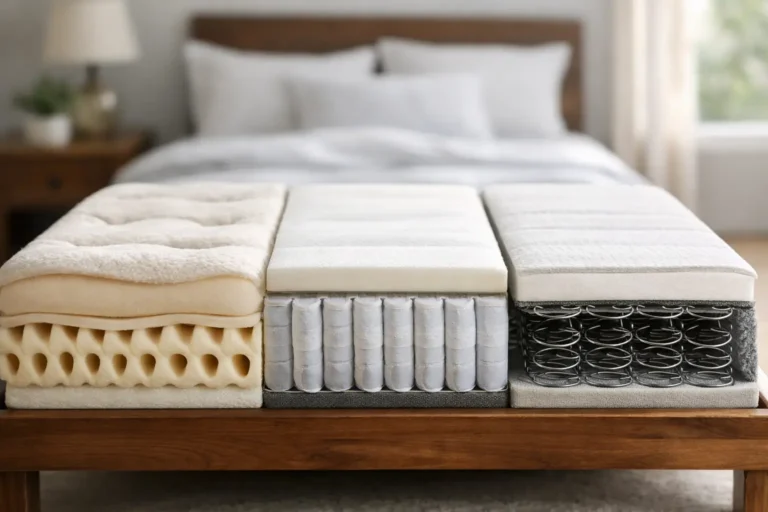
The brand offers both spring-based and foam-focused options. This matters because mattress performance is largely determined by the internal construction. Pocketed coil mattresses tend to feel more responsive and breathable, while foam comfort layers can create a closer, more cushioned feel. A mattress with a thicker comfort layer may be more inviting for side sleepers, but too much softness can be less suitable for someone who needs firm lumbar support.
For many practical households, the strongest value is choice. You can compare a firmer support-oriented design against a plusher model instead of paying for features you may not need. A good mattress is not the one with the longest feature list. It is the one that keeps your body comfortably supported from bedtime through morning.
Support and Firmness: The Most Important Test
Support is often confused with firmness, but they are not the same thing. Firmness describes the surface feel when you first lie down. Support refers to whether the mattress helps keep your spine in a neutral position throughout the night.
A medium-firm Maxcoil model is often a sensible starting point for back sleepers and combination sleepers. It usually provides enough resistance to prevent the hips from dropping too far while still offering comfort around the upper back. If you spend most of the night on your back, pay attention to the space beneath your lower back. A mattress should support that area without creating a hard, raised feeling.
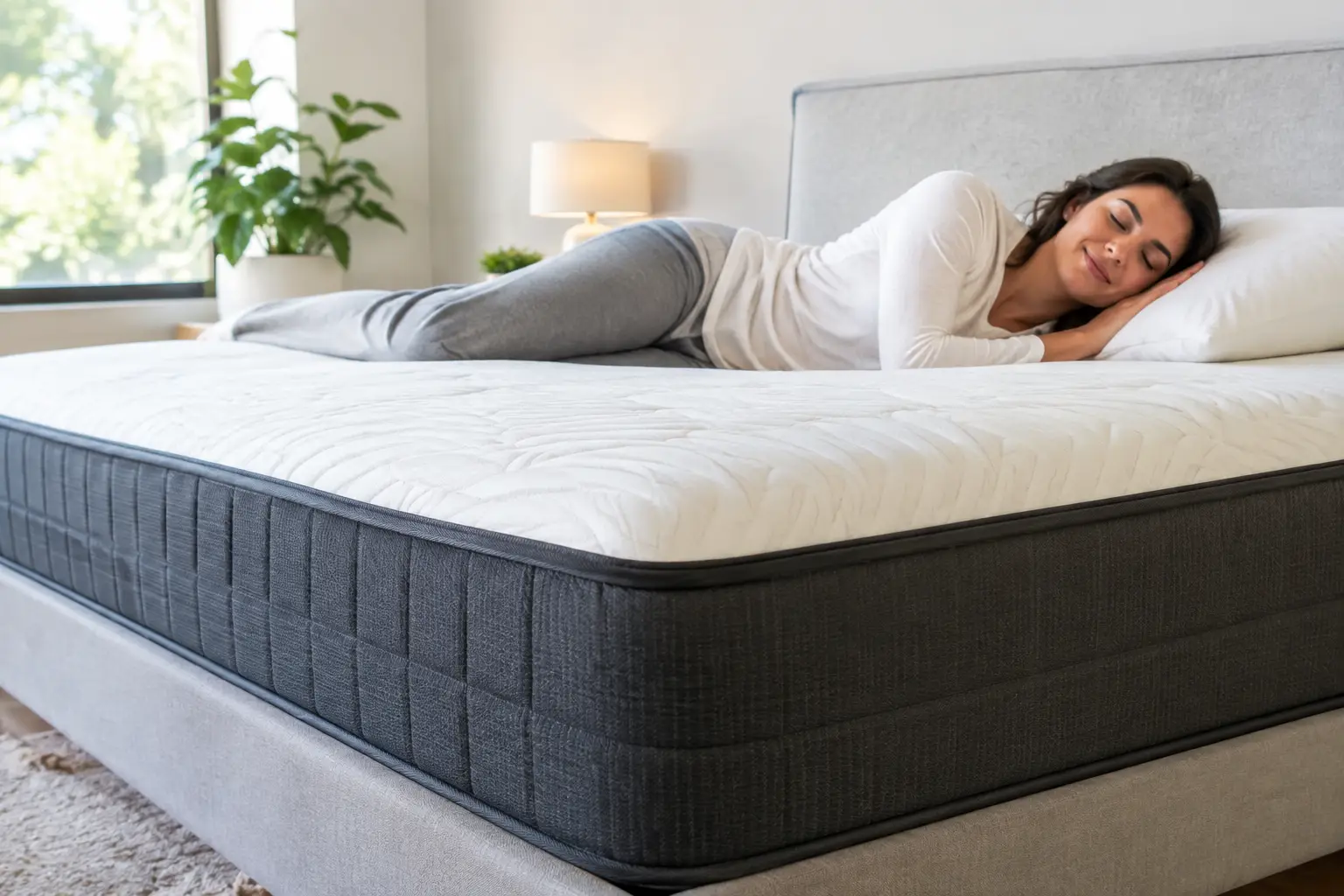
Side sleepers usually need more pressure relief at the shoulders and hips. For them, a Maxcoil mattress with a more forgiving top layer can be a better match than an extra-firm design. The goal is for the shoulder to settle in slightly while the waist and hips remain supported. If your arm regularly goes numb or your shoulder aches when you wake up, the surface may be too firm for your sleeping position.
Stomach sleepers often need a firmer feel, particularly around the pelvis. A mattress that is too plush can allow the midsection to sink, putting the lower back in an uncomfortable position. Larger-bodied sleepers may also prefer firmer or more supportive constructions because they generally need a sleep surface that maintains its shape under greater weight.
Personal preference still matters. Someone used to a firm traditional mattress may find a medium feel unexpectedly soft, while a sleeper moving from a very plush bed may feel the same mattress is too firm. Give your body time to settle, but do not ignore consistent discomfort.
A practical firmness check
When testing a mattress, lie in your normal sleeping position for more than a few seconds. Relax your shoulders, breathe normally, and notice where your body feels pressure. If you are shopping as a couple, both people should test it. A mattress that feels perfect to a lighter side sleeper may feel insufficiently supportive to a heavier back sleeper.
Cooling and Breathability
Sleeping hot can turn an otherwise comfortable mattress into a frustrating purchase. Cooling performance depends on several factors, including the type of comfort foam, the fabric cover, room ventilation, bedding, and whether the mattress allows air to circulate through its core.
Spring and pocketed coil constructions usually have an advantage in airflow because there is open space within the support system. They can be a practical choice for sleepers who dislike the warmer, more enveloping sensation associated with some dense foam mattresses. Foam layers may still offer cooling features, but the result depends on their thickness and density rather than marketing language alone.
For warm and humid bedrooms, mattress setup matters as much as the mattress itself. Use breathable sheets, avoid overly thick waterproof protectors when possible, and make sure the bed base does not block ventilation under the mattress. In compact homes, especially where bedrooms may have limited airflow, these small choices can noticeably improve sleep comfort.
Motion Transfer and Edge Support for Couples
For couples, motion isolation can be just as valuable as softness. If one person gets in and out of bed at a different time, a mattress that transfers every movement across the surface can disturb the other sleeper. Pocketed coil systems and layered foam designs typically offer better motion control than a basic interconnected spring mattress, although performance varies by model.
Test this in a simple way: have one person change position or sit down on one side while the other lies still. You are looking for controlled movement, not complete stillness. No mattress removes all movement, but a good couple-friendly mattress should prevent ordinary turning and bedtime routines from feeling disruptive.
Edge support deserves attention too, particularly if you share a smaller mattress size, sit on the edge to get dressed, or need stable support when getting up. A reinforced perimeter can make the usable sleeping area feel larger and provide a more secure sitting edge. Softer mattress designs may compress more around the border, which is not necessarily a flaw, but it is worth considering before you buy.
Durability Depends on Construction and Care
A mattress should be judged over years, not just its first month. Durability is influenced by the coil system, foam density, how frequently the mattress is used, the combined weight of the sleepers, and the support beneath it. Even a quality mattress can wear prematurely if it sits on an uneven or poorly spaced bed base.
Use a stable frame designed for the mattress type, rotate the mattress when the product care instructions allow it, and keep it protected from moisture and spills. In homes with children or pets, a breathable mattress protector is a worthwhile safeguard. It helps preserve hygiene without changing the feel as much as a heavy, heat-trapping cover might.
Watch for changes that affect sleep quality rather than expecting a mattress to remain exactly as it was on day one. Persistent body impressions, new back discomfort, or a noticeable loss of support are signs to reassess the mattress and its foundation.
Who Is a Maxcoil Mattress Best For?
Maxcoil can be a strong fit for homeowners who want a familiar, practical mattress brand with options across different comfort preferences. It is particularly worth considering if you want balanced support, prefer the responsive feel of springs, or are furnishing a main bedroom without stretching the budget for features that do not match your needs.
It may be less suitable if you already know you want an exceptionally deep memory-foam hug, an ultra-luxury hotel feel, or a highly customized split-firmness setup. Those needs do not make Maxcoil a poor choice. They simply call for a more specific mattress design and a more detailed comparison.
For first-time homeowners furnishing several rooms, it helps to prioritize the mattress used every night. Guest rooms can usually work well with a straightforward medium-firm option, while your primary bed deserves more time and testing. Catnap Lair can help narrow the choices based on sleeping position, body support needs, room conditions, and budget instead of pushing one firmness level for everyone.
How to Choose the Right Model
Start with your normal sleeping position, then consider whether you sleep warm, share the bed, or experience shoulder, hip, or lower-back pressure. Next, think about the bed frame. A mattress paired with a sturdy platform bed or properly supported storage bed will perform more consistently than one placed on an unsuitable base.
Do not choose based on firmness labels alone. “Medium firm” can feel different depending on the comfort layers and your body weight. Ask how the mattress is constructed, whether it has pocketed coils or foam layers, and what kind of support it is designed to deliver. These details make the Maxcoil mattress performance review meaningful for your own sleep, rather than relying on someone else’s preference.
The right mattress should leave you feeling supported, not stuck; cushioned, not swallowed; and ready to sleep instead of overthinking the purchase. Take your time with the test, be honest about what your body needs, and choose the comfort level you will appreciate every night.