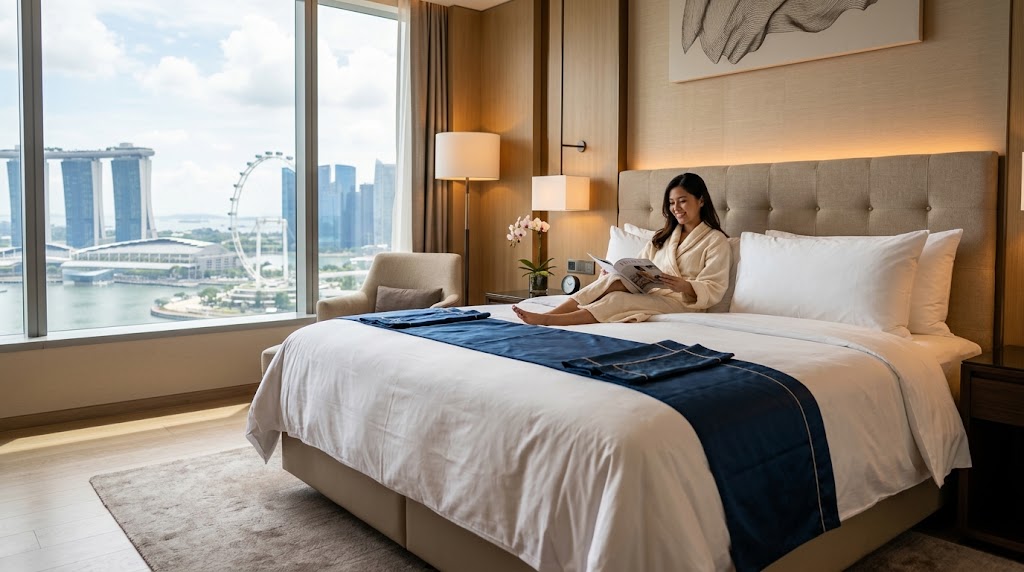
TL;DR: Hotel beds feel different because of a specific formula — a firm pocketed spring support core, a plush pillow-top or euro-top comfort layer, crisp high-thread-count linen, and a mattress protector. It is rarely one magic mattress. Recreate all four layers and you get the same result at home, usually for far less than you’d expect.
You check into a hotel, sink into the bed, and sleep better than you have in months. Then you come home to a mattress you actually paid for and it just isn’t the same.
It is one of the most common things we hear on the showroom floor at our Ubi store. Someone walks in, describes a bed they slept on in a hotel in Bangkok or Bali, and asks whether we sell “that one.”
Here’s the honest answer: hotels almost never use a mattress you can’t buy. What they use is a system. Once you understand the four parts of that system, you can rebuild it at home — and you can usually do it without paying luxury-brand pricing.
Why do hotel beds feel so comfortable?
Three things are happening at once, and none of them are secret.
1. The support core is firmer than you think. Most people assume hotel beds are soft. They aren’t. The base is typically a firm pocketed spring unit with a high coil count. What feels soft is the layer sitting on top of it. Firm underneath, plush on top — that combination is why you sink in without your hips dropping out of alignment.
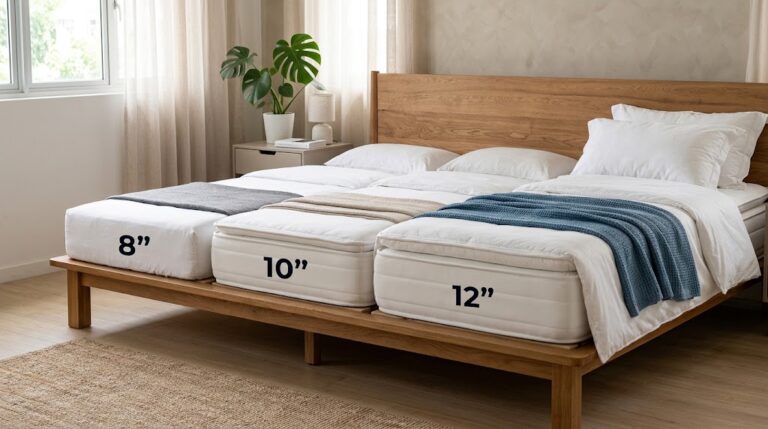
2. There’s a dedicated comfort layer. Pillow-top or euro-top construction adds a distinct cushioning layer stitched above the springs. That’s the “cloud” sensation. A standard mattress with a thin quilted cover cannot replicate it, no matter how good the springs are.
3. Everything is new, or close to it. Hotels rotate mattresses on a cycle — often every 5 to 7 years in higher-tier properties, faster in rooms with high occupancy. You are almost always sleeping on a mattress in the first half of its life. Your mattress at home may be nine years old with a body impression you stopped noticing three years ago.
That third point matters more than most buyers realise. If your current mattress is past eight years old, part of what you’re chasing in a hotel bed is simply a mattress that hasn’t sagged yet.
What type of mattress do hotels actually use?
Across most of the mid-to-upper hotel market, the construction pattern is consistent:
- Pocketed spring support core — individually wrapped coils that respond independently. This is what gives that supported-but-not-rigid feel, and it’s also why you don’t feel your partner turn over.
- Pillow-top or euro-top comfort layer — foam, latex, or fibre-fill cushioning above the springs.
- Medium-firm overall feel — firm enough to hold spinal alignment for a wide range of body types, since a hotel has no idea who is sleeping in the room tonight.
- Neutral-to-cool surface materials — breathable covers that don’t trap heat, which matters enormously in Singapore’s climate.
That last point is where a lot of “hotel-style” replicas fail locally. A plush pillow-top built for a temperate climate can sleep hot in Singapore. If you’re recreating a hotel bed here, cooling performance is not optional.
Also read: Orthopedic Mattress Singapore: Do You Actually Need One? — useful if you also deal with back pain and are unsure how firm to go.
How to recreate a 5-star hotel bed at home: the 4-layer method
Layer 1 — Get the support core right
Start with a medium-firm pocketed spring mattress. This is the single most important decision, and it’s the one people get wrong by shopping for softness first.
If you’re between two firmness levels, go firmer. You can always add plushness on top. You cannot add support to a mattress that’s too soft.
Heavier sleepers should size up on support — a coil unit that feels medium-firm to a 60kg sleeper will feel soft to a 95kg sleeper.
Also read: What Mattress for a Heavy Person Offers Support?
Layer 2 — Add the plush top
You have two routes:
- Buy a mattress with pillow-top or euro-top construction built in. Cleaner, better integrated, and the comfort layer is engineered to work with that specific spring unit.
- Add a separate mattress topper. Cheaper, and a reasonable option if your existing mattress is still structurally sound (under 6 years old, no visible dip). It will not rescue a sagging mattress — it will just make a sagging mattress feel soft on top of the sag.
If your mattress is genuinely worn out, skip the topper. You’re patching a problem the topper can’t reach.
Layer 3 — Fix the linens
This is the layer people skip, and it’s the cheapest one.
Hotel bedding is typically crisp cotton percale in the 300–400 thread count range — not the ultra-high counts marketing pushes. Percale weave gives that cool, papery, freshly-pressed feel. Sateen feels silkier but sleeps warmer, which is a real consideration here.
Add a white duvet with a proper duvet cover rather than a fitted comforter. Part of the hotel look is visual: crisp white, tight corners, no pattern competing for attention.
Layer 4 — Protect it
Every hotel mattress has a protector on it. This isn’t only hygiene — it’s why the mattress still performs in year four. In Singapore’s humidity, a breathable waterproof protector also guards against the moisture and dust mite issues that quietly degrade a mattress here faster than in drier climates.
Does the bed frame matter?
More than most buyers expect. A pillow-top mattress on a frame with wide slat gaps will develop sag between the slats within a couple of years, and no comfort layer will hide that.
For the hotel look specifically, a divan bed frame is the closest match — it’s the upholstered base-on-base construction that hotels use, and it gives the mattress fully even support with no pressure points. An upholstered headboard completes the look.
If you need the space, a storage bed frame can give you the same clean silhouette while solving a real problem in a compact Singapore bedroom.
Also read: Best Bed Frames Singapore for Smaller Homes
What does a hotel-style bed cost in Singapore?
Less than people assume, and the reason is straightforward: you are paying for construction, not for a hotel chain’s name.
The cost is concentrated in the mattress. Spend the bulk of the budget there, on the spring unit and comfort layer. Linens, protector, and headboard styling can be handled comparatively cheaply and still deliver most of the visual and tactile effect.
If cash flow is the constraint rather than the total, our 0% interest instalment plan spreads the cost without credit card or documentation requirements — which is often what makes the difference between buying the right mattress and settling for the affordable one.
Also read: 0% Interest Furniture Instalments That Make Sense
Try before you commit
Here is the part no online description can replace: a hotel bed is a feel, and feel does not transfer through a product page.
At the Catnap Lair showroom at 33 Ubi Avenue 3, you can lie on pocketed spring and pillow-top constructions side by side and identify what you’re actually chasing. Most customers who come in describing a hotel bed discover within ten minutes that what they wanted was a firmer core than they expected, with a softer top than they’d have chosen from a photo.
Browse the full mattress collection or visit the showroom and our team will walk you through it.
Frequently Asked Questions
What mattress do 5-star hotels use in Singapore? Most use a firm pocketed spring support core with a pillow-top or euro-top comfort layer, in a medium-firm overall feel. Brands vary by property, but the construction pattern is remarkably consistent across the industry.
Can a mattress topper give me a hotel feel? Partly. A topper adds the plush comfort layer, but only works if your existing mattress still provides proper support. If your mattress is over eight years old or visibly dipped, a topper will not fix it.
Are hotel mattresses soft or firm? Firmer than they feel. The support core is firm; the plush sensation comes from the comfort layer on top. This is why hotel beds suit such a wide range of sleepers.
Do hotel-style pillow-top mattresses sleep hot in Singapore? They can, if the comfort layer traps heat. Look for breathable covers, gel-infused or open-cell foam, and good airflow through the spring unit. Test the surface temperature in person where possible.
How often should I replace my mattress to keep that feel? Most quality pocketed spring mattresses perform well for 8 to 10 years. Hotels replace on a shorter cycle, which is part of why their beds feel newer than yours.
Where can I try hotel-style mattresses in Singapore? Visit the Catnap Lair showroom at 33 Ubi Avenue 3, Vertex, #01-16. You can compare pillow-top and pocketed spring options in person at direct factory pricing.