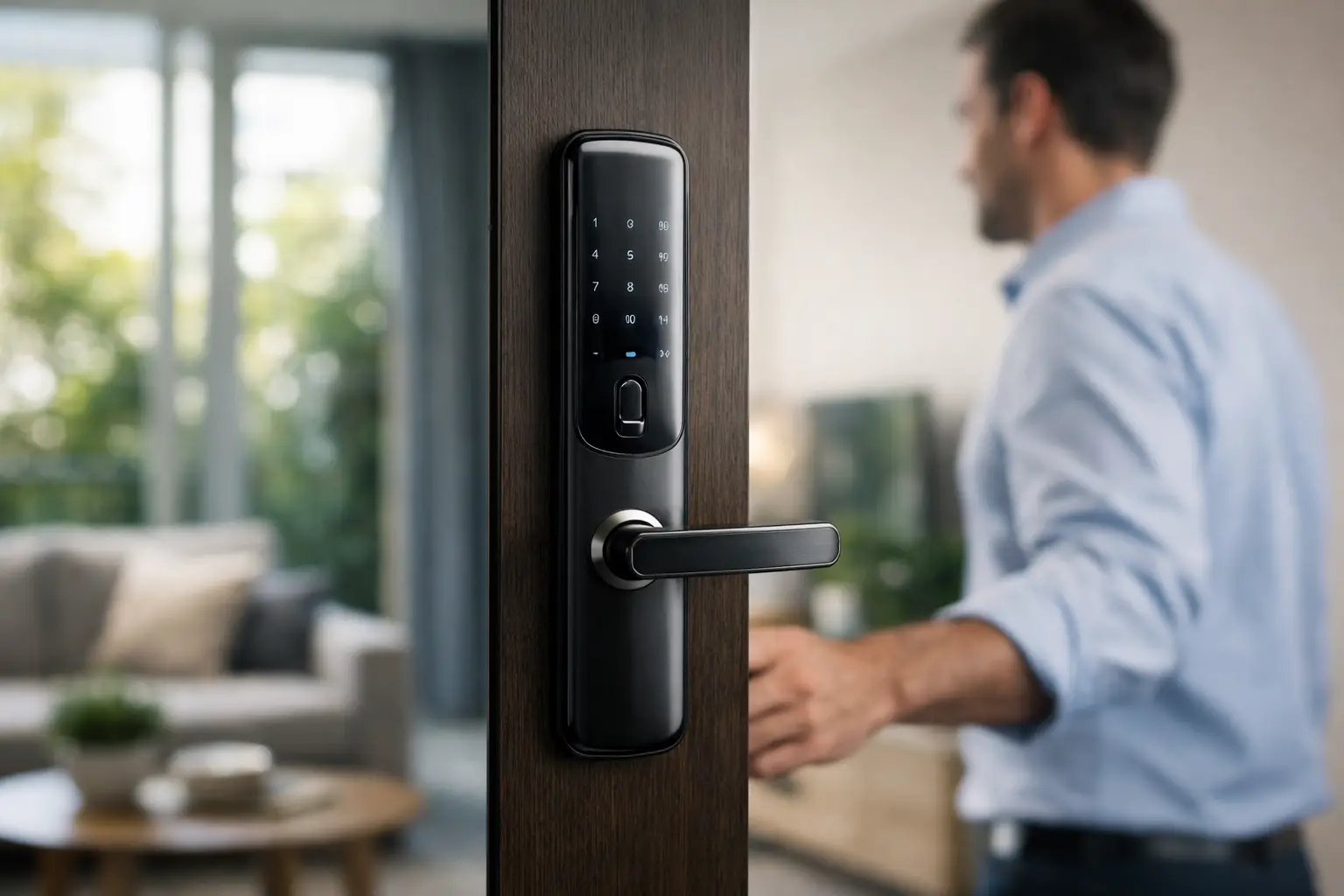
A new front door often looks complete only after the lock is chosen. For homeowners balancing keys, grocery bags, children, deliveries, and busy workdays, a Philips digital lock review is less about flashy technology and more about one practical question: will this make daily life easier without creating new problems?
Philips digital locks are widely considered by homeowners who want keyless entry with a familiar, established home appliance brand behind the product. The appeal is clear: fingerprint access, PIN codes, RFID cards, app-connected options on selected models, and mechanical-key backup can reduce the usual friction at the door. But the right choice depends on your door type, household habits, and expectations for installation and after-sales support.
What Philips Digital Locks Do Well
Philips digital locks are designed around convenient access. Depending on the model, a household may enter by fingerprint, passcode, card, mobile app, or physical key. That range matters when several people use the same door. A parent may prefer a fingerprint, an older family member may feel more comfortable with a card, and a domestic helper or regular visitor may need a managed temporary code.
The fingerprint option is often the main reason buyers move from a conventional lock. It removes the need to find keys at the gate or door, particularly useful when arriving home with shopping bags or a sleeping child. PIN access is equally useful as a backup, and many models allow multiple user credentials rather than forcing the whole household to share one code.
Another strength is the cleaner daily routine. There is no spare key to hide, no keyring to pass between family members, and no need to worry whether a teenager has remembered a key. For homeowners furnishing a new place, this convenience can feel especially worthwhile because the lock becomes part of the home’s everyday flow from day one.
Build quality and door presence also influence the buying decision. Philips models generally have a modern, substantial appearance that suits contemporary wooden doors and metal gates. A digital lock should not be treated as decor alone, but the handle, finish, and keypad do contribute to how polished an entryway feels.
Features vary more than the brand name suggests
One common mistake is assuming every Philips lock includes the same functions. It does not. Some models are focused on straightforward fingerprint and PIN access, while others add Wi-Fi connectivity, remote notifications, video features, or automatic locking. The model name matters as much as the brand.
For example, app control may sound essential, but it is not the best fit for every household. If everyone living at home already has reliable fingerprint access, a simpler non-connected model may offer better value and fewer settings to manage. On the other hand, remote access can be useful for households that receive regular deliveries, have elderly parents visiting, or want activity notifications while away.
Philips Digital Lock Review: The Trade-Offs
A digital lock is a convenience purchase, not a zero-maintenance purchase. Batteries need replacing, fingerprints can occasionally fail to read, and the lock must be installed correctly to perform as intended. These are normal realities of electronic door hardware, not necessarily product faults.
Fingerprint performance can depend on the user and the situation. Very young children, people with worn fingerprints from manual work, or fingers that are wet, dirty, or oily may not be recognized consistently. A good setup includes registering more than one finger per person and making sure every regular user knows the PIN or carries an access card as backup.
Battery management is another consideration. Most digital locks provide low-battery alerts before power runs out, but homeowners should not ignore them. Keep the correct replacement batteries at home and know the emergency power procedure for the specific model. The physical backup key, where provided, should also be stored somewhere secure but accessible outside the locked home.
Price is the other major trade-off. A Philips digital lock costs more upfront than a basic mechanical lock, and professional installation can add to the total. The value is strongest for households that will genuinely use the access features every day. If a home has only one or two occupants who are happy with keys and rarely need to grant access, a premium connected lock may be more than necessary.
Choosing the Right Lock for Your Door
The best digital lock is the one that matches the door, not simply the one with the longest feature list. Before choosing a Philips model, check the door thickness, opening direction, handle configuration, and whether it is a main timber door, metal gate, or other door type. These details affect compatibility and installation work.
For many apartments and homes, the entrance has both a metal gate and a wooden main door. This creates an important decision: should you secure one door digitally or both? A digital lock on the main door may be enough for some households. Others prefer a coordinated setup, with a compatible digital gate lock plus a door lock, so they are not managing keys at either point.
In Singapore-style homes, door clearance and gate design deserve special attention. A lock body or handle that appears suitable in photos may interfere with the gate, wall, door viewer, or existing hardware once installed. Measurements and a proper site assessment can prevent the unpleasant surprise of paying for a lock that cannot be fitted neatly.
Match the access method to your household
For a couple or small family, fingerprint, PIN, and a backup card are usually a practical combination. If you have regular cleaners, caregivers, tenants, or visiting relatives, consider a model that supports distinct or temporary access codes. This gives you more control than sharing one universal PIN.
App-enabled models suit homeowners who value remote management, but they also require comfortable use of a mobile app and stable home connectivity where applicable. Do not pay extra for remote features simply because they sound advanced. Choose them because they solve a real access problem in your household.
Automatic locking is another feature worth considering carefully. It offers reassurance for people who often wonder whether the door was locked after leaving. However, it can be inconvenient if family members frequently step outside briefly without bringing a credential. The right setting depends on your routine, not a generic recommendation.
Installation Is Part of the Product Experience
Even an excellent lock can disappoint when the installation is rushed or poorly planned. Digital lock fitting may involve drilling, aligning the mortise, adjusting strike plates, checking the door gap, and testing every entry method. The installer should confirm that the handle turns smoothly, the deadbolt aligns correctly, and the door closes properly before the job is considered complete.
Ask what is included in the quoted installation price. Door modifications, old lock removal, travel, gate work, and nonstandard door conditions may affect the cost. Clarifying this early is more useful than comparing product prices alone.
After installation, take time to register each user properly. Add multiple fingerprints per frequent user, create sensible PINs, test the physical key, and learn how low-battery and emergency-power access work. This short handover makes a bigger difference than most buyers expect.
Is a Philips Digital Lock Worth It?
For households that want everyday keyless convenience, Philips digital locks can be a worthwhile upgrade. They are particularly appealing for new homeowners who are already coordinating mattresses, storage beds, blinds, curtains, and other essentials, because a digital lock helps set up a more organized arrival-home routine from the start.
They are not automatically the best choice for every budget or door. A simpler model may be the smarter purchase when you only need dependable fingerprint and PIN access. A higher-spec connected model makes more sense when remote credentials, notifications, or enhanced entry management will be used regularly.
At Catnap Lair, the most helpful way to approach a digital lock is the same way we approach furnishing a home: start with how you actually live, then choose the product that supports it. Bring your door measurements, photos of the existing setup, and a clear picture of who needs access. The best lock is not the one with every possible feature. It is the one your household can use confidently, every single day.