Mould, Damp and Humidity: Protecting Furniture in Singapore’s Climate
In short: Mould on furniture in Singapore is almost never caused by the furniture. It is caused by still air against a cool surface — the back of a wardrobe pushed flat against an external wall, the underside of a mattress on a solid base, the back of a sofa pressed into a corner. Move things two inches off the wall and most of the problem disappears.
Every Singapore household eventually finds it. A grey bloom on the back panel of a wardrobe. A musty smell when you open a drawer that has not been opened in a month. Dark speckling on the underside of a mattress when you finally flip it.
The instinct is to blame the furniture — cheap board, poor finish, something the supplier did wrong. Occasionally that is true. Far more often the furniture is fine and the conditions around it are not, and the fix costs nothing.
Why Singapore is harder on furniture than most places
Two things work against you here, and they compound.
Humidity stays high all year. There is no dry season to reset things. Singapore’s mean annual relative humidity is around 82%, according to the Meteorological Service Singapore — climbing above 90% just before sunrise and dropping to about 60% in the mid-afternoon on rain-free days. Even the daily low sits at the edge of the range where mould becomes possible.
Air conditioning creates cold surfaces. This is the part people miss. Mould does not need liquid water — it needs a surface cool enough for the surrounding humid air to condense against. An external wall behind an aircon-cooled bedroom is exactly that surface. So is the floor under a bed in a room that runs cold overnight.
Put warm humid air against a cool surface with no air movement, and you have created the conditions deliberately. Most mould in Singapore flats is found in precisely those three or four spots, in flat after flat.
The number worth knowing. The US Environmental Protection Agency advises keeping indoor humidity below 60%, ideally between 30% and 50%. The Canadian Conservation Institute puts the line slightly higher, at 65%, above which conditions favour mould growth.
Singapore’s 82% annual average sits well above both. Its pre-dawn humidity is half as high again as the EPA’s ceiling.
There is no published Singapore equivalent of that guidance for homes. The national indoor air quality standard is a paid document scoped to air-conditioned commercial buildings rather than flats, so the EPA’s range is the practical one to work to.
And the figure that explains the dust. Dust mites reproduce best between 75% and 80% relative humidity at 25–30°C. Singapore’s climate — 82% mean humidity, monthly averages of 26.8°C to 28.6°C — sits almost exactly inside that band, year-round. Mite populations here are not a housekeeping failure. They are the default condition, and the only reliable lever against them is humidity.
Which materials suffer, and how
| Material | What humidity does | How worried to be |
| Solid wood | Absorbs and releases moisture, so it swells and shrinks. Drawers stick, joints loosen over years | Moderate — it is a living material and some movement is normal |
| Engineered board, MDF, particleboard | Swells irreversibly if the edge seal is breached and water gets in. Does not recover | High — this is the one that fails permanently |
| Leather | Can develop surface mould if left in still, humid air. Cleans off if caught early | Moderate — recoverable with attention |
| Fabric upholstery | Holds moisture in the foam beneath. Smells before it shows | Moderate to high, depending on airflow |
| Mattresses | Trap body moisture against a solid base with nowhere to go | High if the base is solid and unventilated |
The pattern is worth noticing: solid materials move but survive. Engineered board and foam either stay dry or fail. That is the real argument for checking edge sealing and base ventilation when you buy, rather than for avoiding engineered board altogether — most modern furniture uses it, and sealed properly it is fine.
The four places it actually starts
Behind the wardrobe. A wardrobe flat against an external or bathroom-adjacent wall, in an air-conditioned bedroom, is the most common case we see. The back panel is thin, the wall behind is cool, and no air moves between them.
Fix: pull it forward 50mm. That is enough for air to move. If the room layout will not allow it, leave the wardrobe doors slightly open when the room is unoccupied.
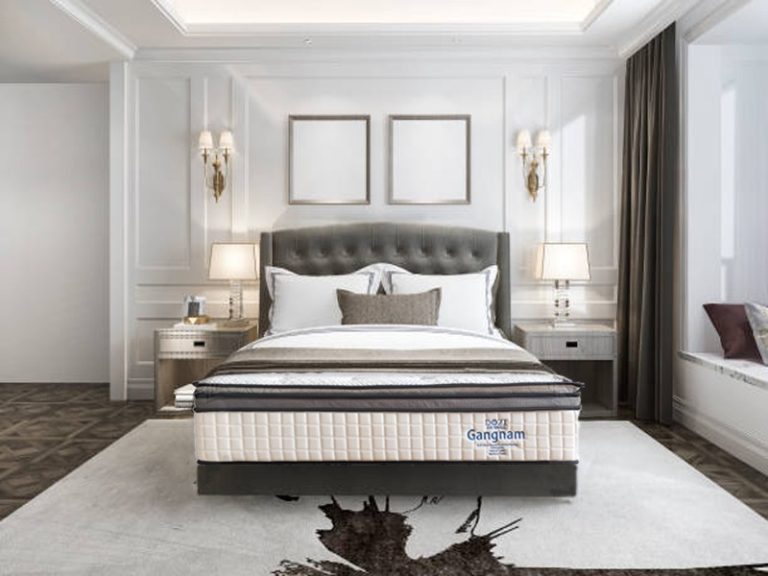
Under the mattress. You lose a meaningful amount of moisture into your mattress every night. On a slatted base it evaporates downwards. On a solid platform base, or a storage bed with a fully closed top, it has nowhere to go.
Fix: if your base is solid, lift and stand the mattress against a wall for a couple of hours every few months. Storage beds with gas-lift mechanisms make this easy — open the base and leave it propped for an hour.
Behind and underneath the sofa. Same principle as the wardrobe, with the added problem that nobody looks there for months at a time.
Fix: 50mm clearance, and move it out when you vacuum.
Below the air conditioner. A unit that drips, or a drainage pipe that sweats, puts water on the wall and whatever is against it. This is the one case where you have an actual leak rather than a humidity problem.
Fix: service the unit. Do not simply move the furniture and leave the drip.
The habits that prevent most of it
Leave a gap. If there is one thing to take from this article: 50mm between any large furniture back and an external wall. It costs you two inches of room and prevents the majority of cases.
Open the room up regularly. A bedroom that is air-conditioned overnight and closed all day never dries out. Open windows and let it breathe for an hour or so when the weather allows.
Use the aircon’s dry mode, not just cool. It removes moisture rather than only dropping temperature, which is the more useful thing for your furniture.
Check the places you never look. Twice a year, pull out the wardrobe and the sofa and look at the wall behind them. Mould caught at the speckling stage wipes off. Mould left for a year is a replacement job.
Do not store damp textiles in closed furniture. Slightly damp clothes in a closed wardrobe will mould the wardrobe, not just the clothes.
What to do if you find it
On a hard surface caught early, wipe with a mild detergent solution, dry thoroughly, and leave the piece open to air for a day. Do not seal it back up while any dampness remains — that is how it returns within weeks.
On fabric or foam that has gone through to the inside, be realistic. Surface cleaning a mattress or sofa cushion that smells musty throughout rarely works for long, because the growth is in the foam rather than the cover. If it smells when dry, it needs replacing.
And if mould keeps returning in the same spot after you have fixed the airflow, the wall itself is wet. That is a building problem, not a furniture one, and it needs looking at before you put anything back against it.
What to look for when buying
The furniture decisions that matter for humidity are not the obvious ones.
Ventilated bases. Slats beat a solid platform for mattress life. If you want the storage, a storage bed with a gas-lift base at least lets you open it up and air the mattress properly — which a fixed platform never does.
Sealed edges on board furniture. Run a finger along the bottom edge of any wardrobe you are considering. Exposed or poorly sealed board edges are where water gets in, and swollen board does not recover.
Removable, washable covers on sofas. Being able to take a cover off and wash it is worth more here than it is in a dry climate.
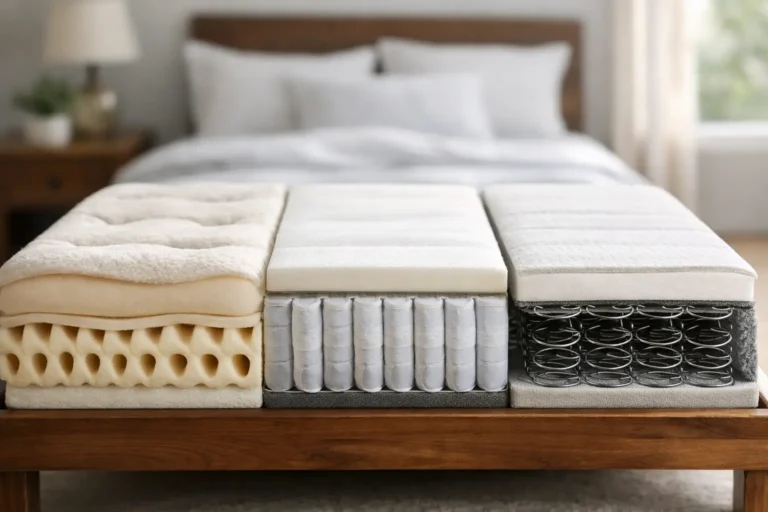
Breathable mattress construction. Pocketed spring and well-ventilated foam constructions move air better than dense solid foam. If damp and dust are a concern for you generally, our guide to choosing a mattress for allergies covers the overlap.
Open a few bases up and the difference is obvious in a way no photograph manages. Come to the Ubi showroom and open a few up.
Already dealing with mould? Tell us which room, which wall, and what the furniture is sitting against, and we will tell you whether it is a placement problem you can fix in an afternoon or a piece that has gone too far. We would rather save you a replacement than sell you one.
Frequently Asked Questions
Why does my wardrobe smell musty even though nothing is wet?
Almost always still air against a cool back panel. A wardrobe flat against an external or bathroom-adjacent wall in an air-conditioned room has no air movement behind it, and humid air condenses on the cool surface. Pull it 50mm off the wall.
Can mould grow on furniture without visible water?
Yes. Mould needs humidity and a surface cool enough for moisture to condense on, not standing water. This is why it appears behind furniture in air-conditioned rooms with no leak anywhere.
Is a dehumidifier worth it in Singapore?
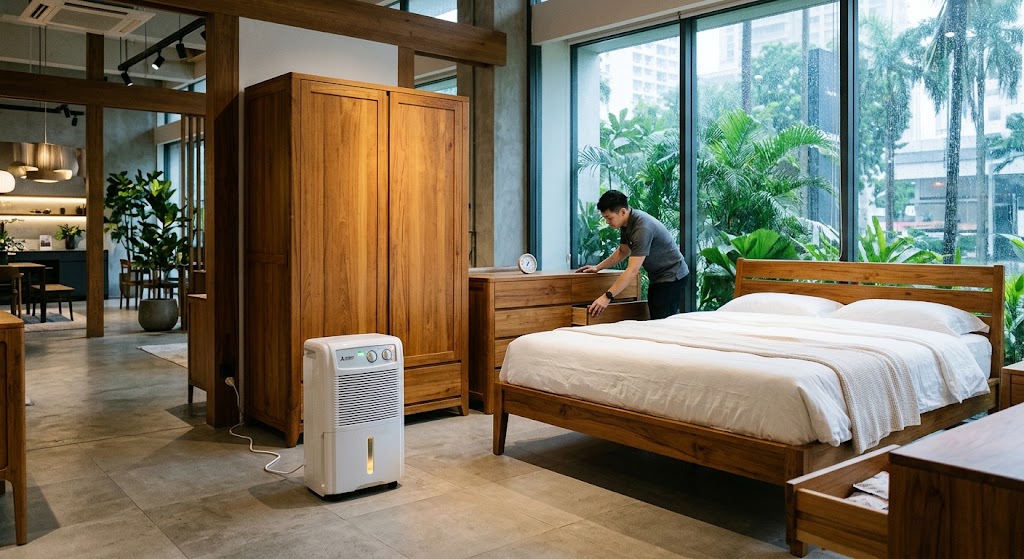
In a specific problem room — one that stays closed, has poor airflow, or has had mould before — it helps. For a whole flat it is usually less effective than simply improving airflow and leaving gaps behind furniture.
How do I get mould off a mattress?
If it is light surface speckling, vacuum it, wipe with a mild detergent solution, dry it completely in moving air, and fix whatever caused it. If the mattress smells musty when dry, the growth is inside the foam and cleaning will not hold.
Does leather furniture survive Singapore’s humidity?
Yes, with airflow and occasional attention. Leather can develop surface mould in still humid air, but it cleans off if caught early. Keep it off external walls and out of permanently closed rooms.
Will air conditioning stop mould or cause it?
Both, depending on use. Dry mode removes moisture and helps. Cooling a room while leaving furniture pressed against cool external walls creates condensation points and makes it worse.