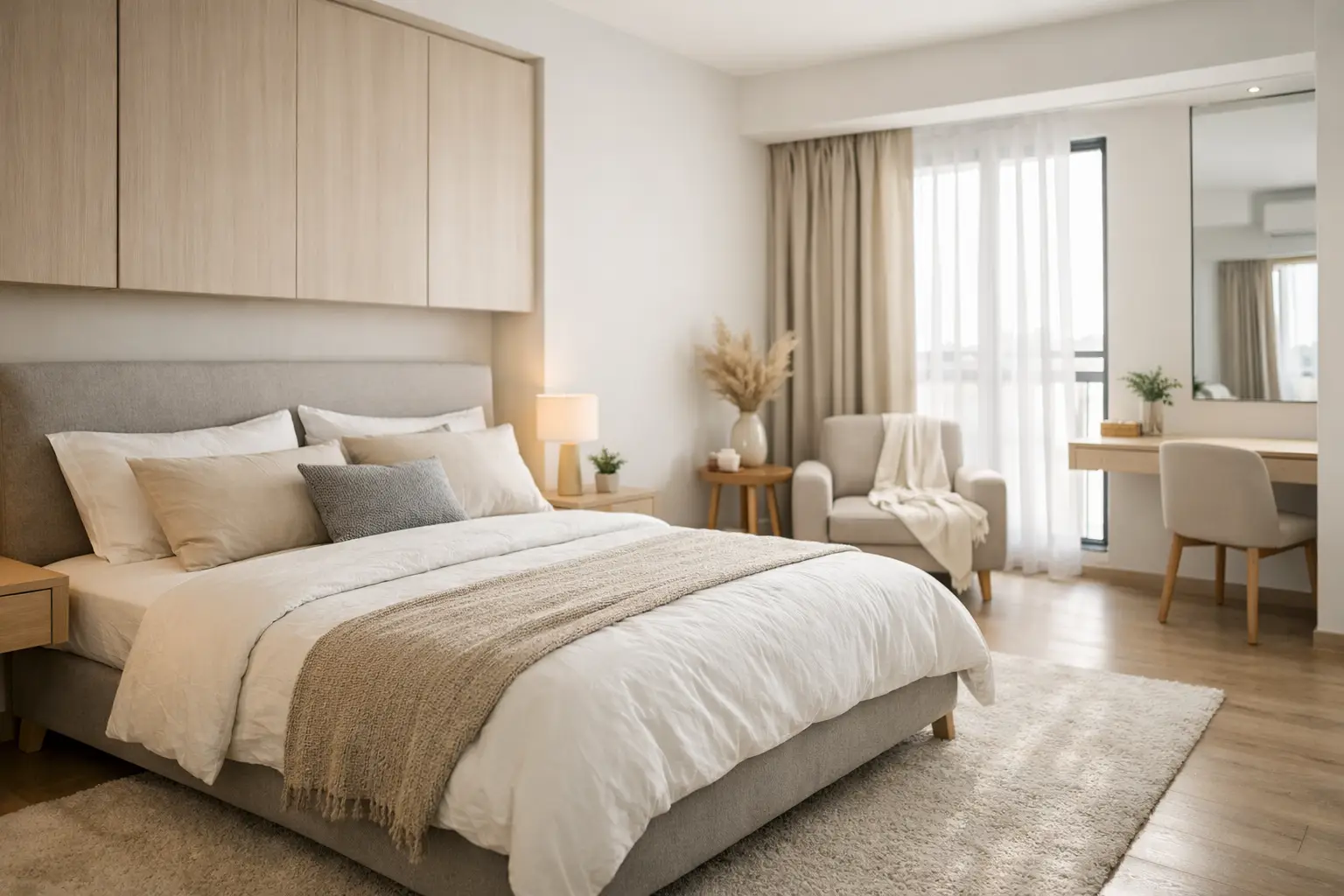
The difference between a cramped BTO bedroom and a restful retreat is rarely a major renovation. It is usually a series of practical decisions: choosing the right bed footprint, giving storage a proper home, and leaving enough visual breathing room around the furniture. This BTO bedroom makeover example shows how a typical compact primary bedroom can feel more spacious, organized, and genuinely comfortable without filling it with expensive décor.
The goal is not to make the room look like a showroom that no one sleeps in. It is to create a bedroom that works on busy mornings, supports better sleep at night, and still has space for the clothes, bags, bedding, and everyday items that real households own.
The Starting Point: A Bedroom That Looks Busy
Imagine a new BTO primary bedroom with a queen bed, a built-in wardrobe, and limited clearance at both sides of the bed. The homeowners have done the basics: a standard bed frame, a mattress, blackout curtains, and a small bedside table. Yet the room feels tight.
The common problem is not necessarily the room size. It is that the bed frame has unused space below it, loose storage has started gathering in corners, and several different furniture finishes compete for attention. A bulky headboard can make the wall feel shorter, while a deep bedside table takes up the narrow walkway that should remain clear.
For this makeover, the priority is simple: make the bed work harder, reduce visual clutter, and choose finishes that help the room feel calm rather than crowded.
BTO Bedroom Makeover Example: The Layout Plan
The queen bed remains centered on the main wall, but the original frame is replaced with a storage bed in a light oak or warm neutral finish. This is the most meaningful upgrade in a compact bedroom because it turns a large, underused footprint into hidden storage.
A lift-up storage bed is useful for bulky items such as extra pillows, luggage, seasonal bedding, and spare linens. A drawer bed can be the better choice when you want easy access to frequently used items, but it needs enough room at the sides or foot of the bed for drawers to open. In a tight layout, this trade-off matters. Measure the clearance before choosing a drawer configuration, rather than assuming every storage bed will fit the same way.
The bed is paired with a slim upholstered or padded headboard instead of a thick, oversized one. Soft fabric adds comfort when reading in bed, while a lower-profile design keeps the room visually open. If the bedroom has a tight side passage, consider one narrow bedside table rather than two matching large ones. A wall-mounted shelf or a compact floating nightstand can provide a place for a phone and glasses without taking over the floor.
At the foot of the bed, avoid adding a bench simply because it appears in inspiration photos. It can look polished in a large room, but in many BTO bedrooms it becomes a place to pile clothes and obstructs access to the wardrobe. A clear walkway will make the room feel better every single day.
Why the Bed Should Lead the Design
The bed is the largest item in the room, so it should be selected before curtains, wallpaper, or decorative accessories. Its dimensions, storage style, headboard height, and color influence nearly every other decision.
A platform bed may suit homeowners who prefer a clean, low-profile look and already have adequate wardrobe storage. A pullout bed is more relevant for a child’s room or a flexible guest room where an extra sleeping surface is occasionally needed. For a primary bedroom, a storage bed is usually the stronger all-around choice because it combines a polished appearance with practical capacity.
Build the Room Around Better Sleep
A beautiful bed frame cannot make up for a mattress that leaves you waking up stiff, overheated, or unsupported. In this makeover, the homeowners replace an aging mattress with a supportive option chosen for their actual sleep habits, not just a quick lie-down in a store.
For couples, motion isolation is worth considering if one person wakes earlier or changes position often. Side sleepers typically need enough pressure relief around the shoulders and hips, while back sleepers often prefer a more stable, medium-firm feel that supports the lower back. Body weight, preferred sleeping position, and temperature preference all play a part, so there is no single “best” firmness for every household.
A cooling mattress can be especially useful for sleepers who feel warm at night, but cooling materials should not be treated as a substitute for good airflow and breathable bedding. Pair the mattress with a mattress protector that does not trap too much heat, and use sheets that feel comfortable for your preferred sleep temperature.
This is where a proper consultation can save frustration. At Catnap Lair, homeowners can compare mattress feel, support, and bed-frame options with practical guidance instead of guessing from a product photo. The right choice should suit your body and room, not only the latest trend.
Use Color to Create Depth, Not Visual Noise
For this BTO bedroom makeover example, the base palette is warm white, light wood, muted taupe, and soft gray-green. These colors are not the only answer, but they create an easy starting point for a smaller room because they reflect light and keep large surfaces from feeling heavy.
Paint or wallpaper should support the bed wall rather than compete with it. A Korean textured wallpaper in a subtle linen-like finish can add depth without making the room feel busy. If you prefer a mural, use it intentionally on one wall and keep the remaining walls quieter. A large-scale design can look striking, but it may overwhelm a room when paired with patterned curtains, colorful bedding, and dark furniture.
The key is contrast in moderation. A light room still needs some definition, so introduce darker tones through a charcoal cushion, a walnut-toned lamp base, or framed artwork. These smaller accents give the eye places to rest without shrinking the overall space.
Keep Furniture Finishes Consistent
A common furnishing mistake is buying each item separately over several months. The result can be a black bed frame, gray wardrobe handles, white side tables, and reddish wood flooring that never quite works together.
You do not need every piece to match exactly. In fact, exact matching can look flat. Choose one dominant wood tone and one or two neutral finishes, then repeat them across the room. For example, a light oak storage bed, cream upholstered headboard, white wardrobe, and matte black lighting can feel intentional and modern.
Window Treatments That Do More Than Block Light
Bedrooms need privacy, light control, and insulation from the morning sun. Curtains remain a strong option for adding softness and a hotel-like feel, especially when installed close to the ceiling and extended wider than the window. This makes the window appear larger and gives the room a taller, more finished look.
For a cleaner, more minimal style, combi blinds offer adjustable light filtering throughout the day. Roller blinds work well when you want a neat, compact profile. The best choice depends on how you use the room. If you work shifts or need a darker sleep environment, prioritize blackout performance. If the room feels dim already, consider layered treatments that allow daylight in while preserving privacy.
Avoid curtains that stop awkwardly above the floor or pool heavily on it. In a compact bedroom, properly measured window treatments make a bigger difference than many decorative accessories.
Lighting That Changes the Mood After Dark
One central ceiling light is functional, but it rarely makes a bedroom feel restful. Add at least two softer light sources around the bed, such as compact bedside lamps or wall lights. Warm white bulbs are generally more relaxing for nighttime use than harsh cool lighting.
If bedside space is limited, wall-mounted reading lights are useful. They free up the tabletop and create a deliberate, boutique-hotel effect. Place switches where they are easy to reach from bed, particularly if you are planning electrical work before moving in.
A mirror placed to catch natural light can also brighten the room, but position it thoughtfully. It should not block a walkway or reflect clutter from the wardrobe area. Good lighting helps a room feel larger, while poor lighting can make even a well-furnished bedroom feel unfinished.
The Finishing Layer: Less Stuff, Better Function
The finished bedroom has hidden storage beneath the bed, a supportive mattress, one compact nightstand, coordinated window treatments, and layered lighting. Bedding is kept simple: a fitted sheet, duvet, two sleeping pillows per person if needed, and a few cushions rather than a pile that must be removed every night.
Add personality with a framed print, a small plant if the room receives suitable light, or one textured throw. Leave some surfaces empty. Empty space is not wasted space in a bedroom – it is what makes the room easier to clean, easier to move through, and more peaceful to come home to.
Before buying the next decorative item, stand at the bedroom door and ask one practical question: does this help the room rest better, store better, or feel better? If the answer is no, save the space for the things that truly make home comfortable.