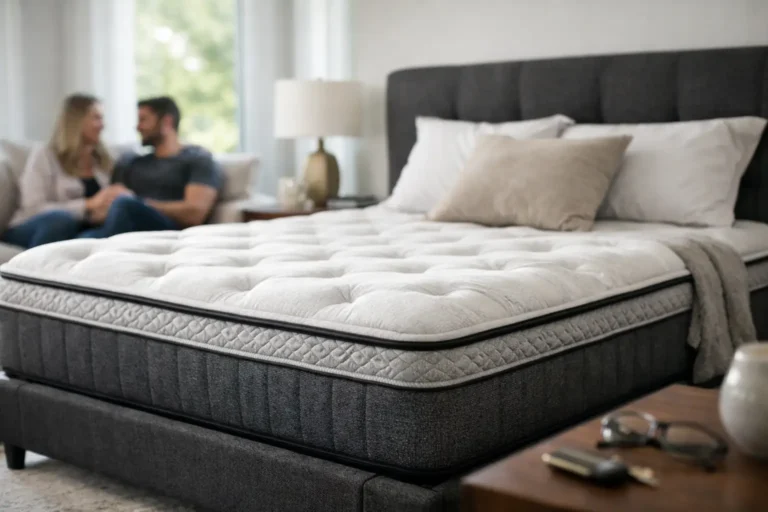
A mattress can feel impressively soft for five minutes in a showroom and still leave you waking up with a sore lower back a month later. For shoppers asking what mattress for a heavy person will actually provide comfort, the answer is not simply “the firmest one.” The better choice is a mattress that keeps the body supported, lets the shoulders and hips settle in appropriately, and holds up to regular use without developing deep impressions too soon.
Body weight changes how a mattress performs. More pressure is placed on the comfort layers, springs, edges, and foundation. That does not mean a heavier sleeper needs to sacrifice cushioning for support. It means the materials, construction, and firmness level need to work together.
What mattress for a heavy person should feel like
A suitable mattress should feel stable first, then comfortable. When lying on your back, your hips should not sink lower than your shoulders. When sleeping on your side, the mattress should cushion your shoulder and hip enough to keep your spine in a reasonably straight line. If you feel as though you are lying in a dip, or you need to tense your muscles to avoid rolling toward the center, the mattress is too soft or lacks adequate support.
Many heavier adults find medium-firm to firm mattresses more comfortable over time than plush models. However, “firm” is not a universal standard. One brand’s medium-firm mattress may feel noticeably firmer than another’s. Your sleeping position, body shape, and whether you sleep alone or with a partner all matter.
Back sleepers often do well with a medium-firm or firm feel that supports the lumbar area. Stomach sleepers generally need a firmer, flatter surface to prevent the pelvis from dipping. Side sleepers may prefer a medium-firm mattress with a pressure-relieving top layer, provided the core remains supportive. A very hard surface can create shoulder and hip pressure, especially for side sleepers.
Start with the support core, not the pillow top
The support core does most of the hard work. Attractive quilting and a thick pillow top may influence the first impression, but they should not be the deciding factor for a mattress intended for a heavier person.
Pocket springs offer targeted support
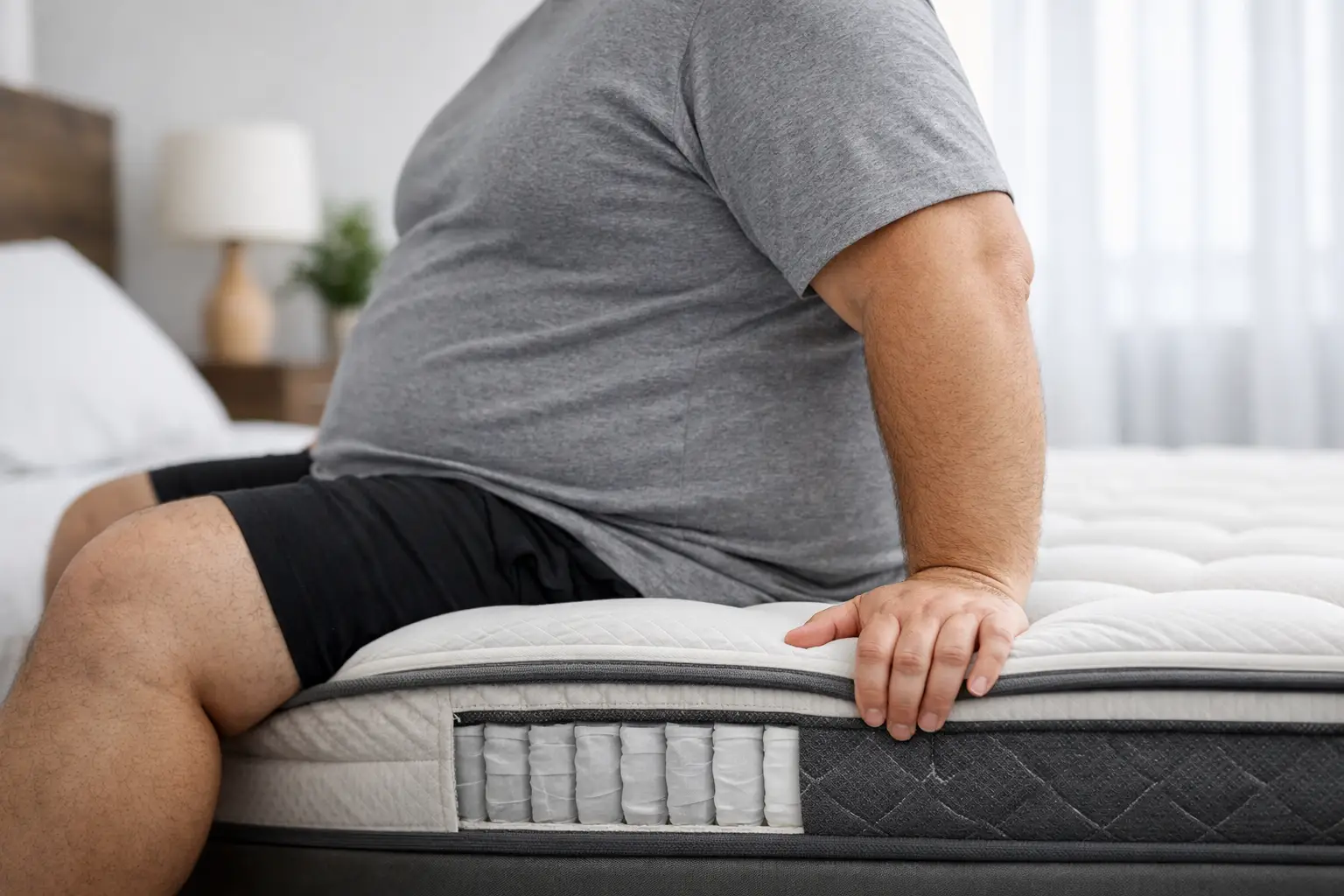
A quality pocket spring mattress can be an excellent choice because each spring responds more independently to pressure. This can help support the body across different zones while reducing motion transfer when a partner changes position. Look for a mattress that feels steady at the center and edges, not just soft on top.
Spring count alone does not tell the whole story. Steel quality, spring design, comfort-layer density, and overall construction all affect performance. A higher number is not automatically better if the surrounding materials are thin or overly soft.
High-density foam can feel stable and quiet
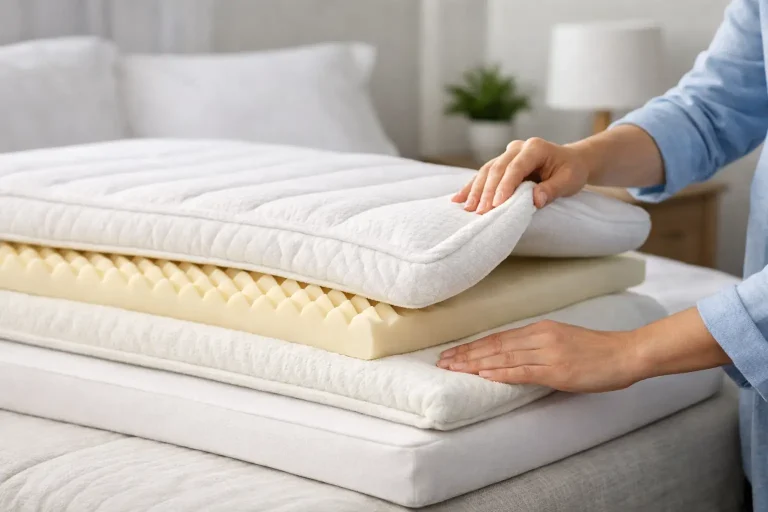
Foam mattresses can provide consistent contouring and minimal motion transfer. For heavier sleepers, the key is density and resilience. Low-density foam may compress quickly, feel warm, and lose its supportive feel sooner. Higher-density support foam is more likely to maintain a stable sleeping surface.
Memory foam can be comfortable for pressure relief, but an overly thick, slow-moving memory foam layer may allow too much sinkage or make repositioning harder. This is especially relevant for combination sleepers who change from back to side sleeping through the night. A responsive foam or hybrid construction often makes movement easier.
Hybrid mattresses balance cushioning and structure
Hybrid mattresses combine springs with foam or latex-like comfort layers. They are popular for good reason: the coils add support, airflow, and bounce, while the top layers reduce pressure points. For many heavier couples, a well-built hybrid is a practical middle ground between the buoyant feel of an innerspring mattress and the body-contouring feel of foam.
The trade-off is that not all hybrids are built alike. A hybrid with soft, thick comfort layers can still feel too plush. Test how far your hips settle into the mattress, not only how comfortable it feels at the shoulder.
Do not ignore the mattress edge
Edge support matters more than many shoppers expect. It gives you a stable place to sit while getting dressed, helps you use the full width of the bed, and reduces that sliding sensation near the perimeter. This is particularly valuable in smaller bedrooms where a larger bed may already be a tight fit.
Sit near the edge during a showroom test. Then lie close to it as you normally would. Some compression is normal, but you should not feel as though the mattress is folding beneath you. Stronger edge support can also make sharing a queen or king bed feel more comfortable because both sleepers can use more of the surface.
Cooling matters when comfort layers compress
Heavier sleepers may sleep warmer because the body settles more deeply into the mattress, reducing airflow around it. A cooling cover can feel pleasant, but long-term temperature comfort depends on the full construction.
Pocket springs and other open structures generally allow more airflow than solid foam cores. Breathable fabrics, ventilated foam, and temperature-regulating materials can also help. Still, cooling claims should be considered alongside support. A mattress that feels cool but lets your spine sink out of alignment is not a good trade.
Your bedding also has an effect. A breathable mattress protector, lighter comforter, and moisture-wicking sheets can improve sleep temperature without changing the mattress itself.
Match the bed base to the mattress
A supportive mattress needs a supportive base. An old foundation with broken slats, wide gaps, or a sagging center can make even a new mattress feel uneven. Before replacing your mattress, inspect the frame and base closely.
For platform beds and storage beds, check that the slats are closely spaced, secured properly, and supported by a center beam and legs where needed. For larger mattress sizes, a weak center support can lead to premature sagging. Storage beds are especially useful in compact homes, but their practical storage should never come at the expense of a stable mattress foundation.
Always confirm that the selected bed frame and base are appropriate for the mattress type and the combined weight of sleepers. This protects comfort, durability, and warranty coverage.
Choose a size that gives your body room to recover
Mattress size is not just about fitting the room. It affects sleep quality. A heavier sleeper may feel more comfortable on a queen or king because there is more room to change position without reaching the edge. Couples should consider whether each person has enough personal space, particularly if one or both sleepers move often at night.
That said, buying the biggest possible bed is not always the smartest solution. Measure doorways, walkways, wardrobes, and the distance needed to open storage drawers. In a compact bedroom, the right layout can make a queen bed feel more practical than a king that blocks daily movement.
Test the mattress the way you sleep
A quick sit-down test is not enough. Spend at least several minutes in your usual sleeping position. If you sleep with a partner, test together. Notice whether the mattress stays level, whether turning feels difficult, and whether motion travels across the bed.
Ask about the mattress materials, recommended foundation, firmness level, and care instructions. It is also reasonable to ask how the mattress is expected to perform for your body type. Honest advice should focus on fit, not pressure to buy the most expensive model.
At Catnap Lair, shoppers can compare mattresses from established options such as Dozi, Lady Americana, Maxcoil, Sleepy Night, and Fourstar while getting practical guidance on firmness, support, cooling, and a compatible bed frame. The goal is not to choose a label or a trend. It is to find a mattress that feels dependable after months of real sleep.
A mattress for a heavier person should not feel like a compromise between comfort and durability. When the support core is sound, the comfort layers are proportionate, the edges are stable, and the base is properly matched, better sleep becomes much easier to build around.